
It’s not just glass. It’s your shield against heat, noise, glare, UV rays — and even intruders
When homeowners invest in premium aluminium windows and doors, most of the discussion revolves around frame colour, profile thickness, or whether the window slides or opens.
But here’s the uncomfortable truth:
80–90% of a window’s performance comes from the glass — not the frame.
Choosing the wrong glass combination can quietly turn a luxury home into:
- A heat trap
- A noisy box
- An energy-draining space
- A security risk
And the worst part? You often realise this after installation, when fixing it is expensive or impossible.
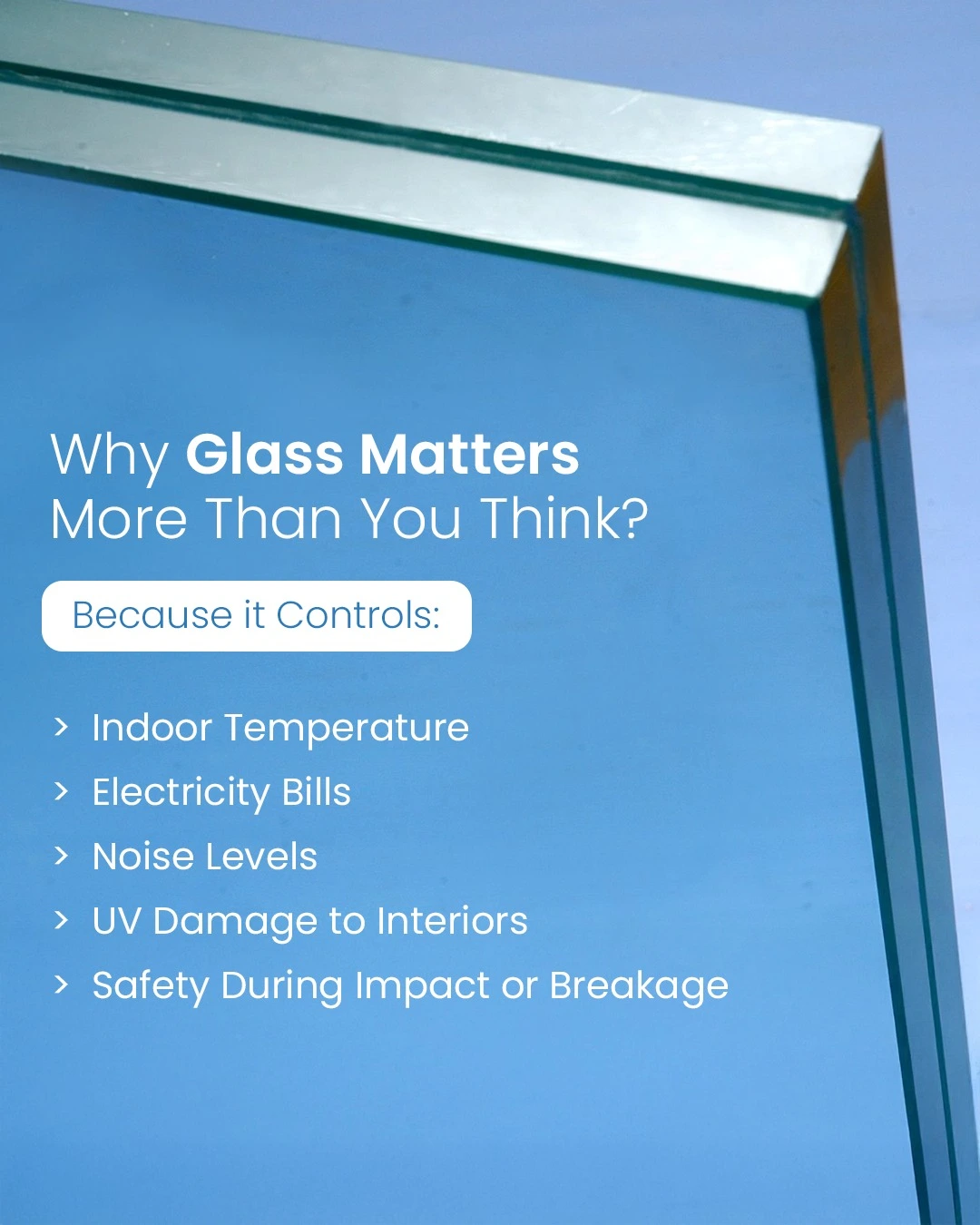
Why Glass Matters More Than You Think
In modern homes, especially villas, penthouses, and large apartments:
- Glass dominates the façade
- Windows are bigger than ever
- Sun exposure is more intense
- Noise levels are higher
That means your glass controls:
- Indoor temperature
- Electricity bills
- Noise levels
- UV damage to interiors
- Safety during impact or breakage
Yet many homeowners still say: “Just give me double glazing. That’s premium, right?” Not always.
The Biggest Myth: “Double Glazing Is Enough”
Double glazing (DGU – Double Glazed Unit) simply means:
- Two glass panes
- Separated by an air or gas gap
But here’s the critical part most people miss:
A DGU is only as good as the glass inside it.
Clear glass + clear glass =
- Poor heat control
- Harsh glare
- Limited noise reduction
This mistake is extremely common in south- and west-facing aluminium sliding windows in India, where solar heat is brutal.
Real Story: The Hot Penthouse in Gurgaon
A homeowner installed floor-to-ceiling aluminium sliding doors in a Gurgaon penthouse. They chose toughened double-glazed glass everywhere.
On paper — it sounded perfect.
In reality:
- Bedrooms overheated by noon
- AC ran all day
- Curtains stayed permanently closed
- Electricity bills exploded
Problem: The glass had no Low-E coating, no solar control, no insulation strategy.
Solution: Replacing it with Low-E, argon-filled DGU reduced:
- Room temperature by ~5°C
- Glare dramatically
- AC load significantly
Same frames. Completely different experience.
Understanding the Main Types of Glass (In Simple Terms)
Let’s break this down clearly.
1. Toughened Glass – Strong, But Limited
Toughened (tempered) glass is:
- 4–5× stronger than normal glass
- Safer when it breaks (crumbles into small pieces)
But it does NOT:
- Control heat
- Reduce noise significantly
- Block UV rays effectively
It’s a safety glass, not a comfort glass.
2. Laminated Glass – Safety + Silence + Security
Laminated glass sandwiches a PVB interlayer between two glass panes.
Why it matters:
- Glass stays intact even when broken
- Excellent for child safety & burgl ary resistance
- Reduces noise by 35–40 dB
- Blocks up to 99% UV rays
Ideal for:
- Ground floors
- Villas
- High-noise zones
- Homes with children
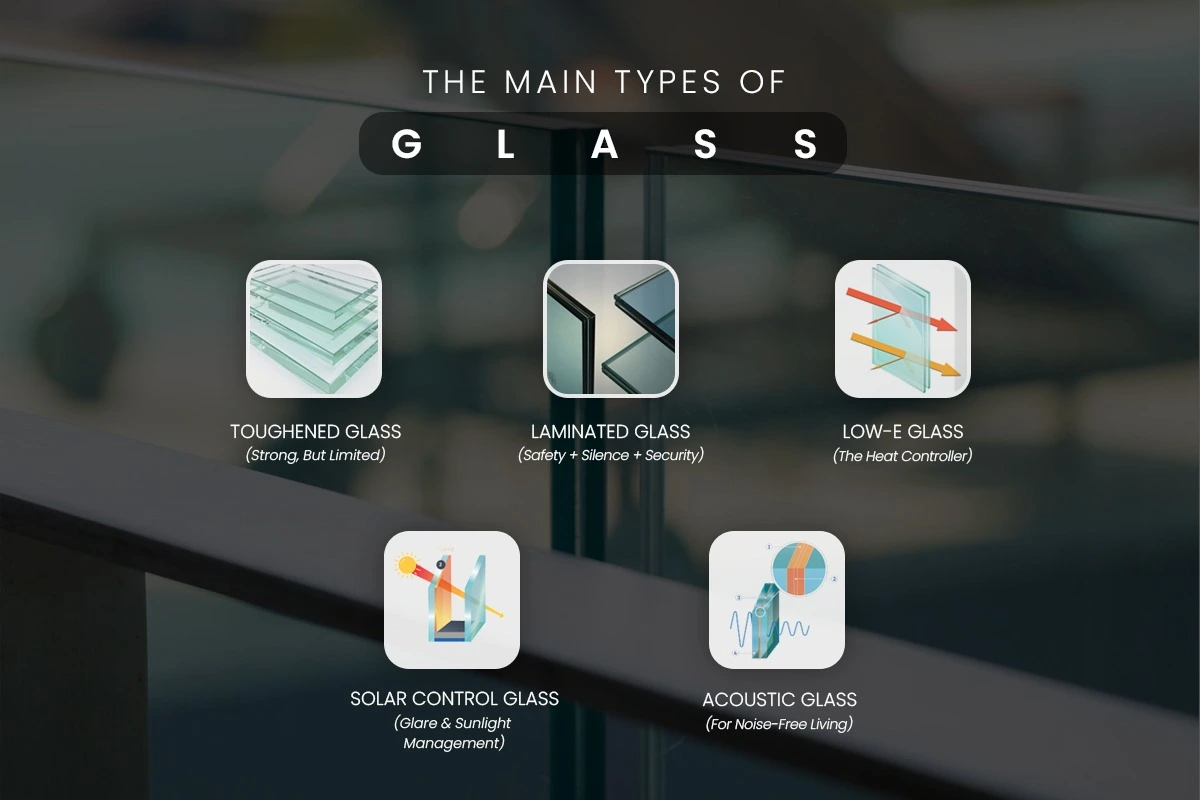
3. Low-E Glass – The Heat Controller
Low-E (Low Emissivity) glass has an invisible metallic coating.
What it does:
- Reflects infrared heat
- Allows natural daylight
- Reduces heat gain by 40–60%
- Cuts AC bills by 20–30%
If your home faces:
- South
- West
- Open sky exposure
Low-E glass is not optional — it’s essential.
4. Solar Control Glass – Glare & Sunlight Management
Solar control glass:
- Reflects excess solar radiation
- Reduces glare on floors & screens
- Keeps interiors bright without overheating
Perfect for:
- Living rooms
- Large sliding doors
- Glass façades
5. Acoustic Glass – For Noise-Free Living
Acoustic glass is usually laminated glass with a special sound-dampening interlayer.
Benefits:
- Reduces traffic, construction, and urban noise
- Can achieve 40–45 dB sound reduction
- Works best when combined with airtight aluminium window systems
If silence matters to you — this is non-negotiable.
The Power Combo: Argon-Filled Double Glazing
Inside a DGU, the air gap can be filled with argon gas.
Why argon matters:
- Better thermal insulation than air
- Reduces condensation
- Improves energy efficiency
The cost difference is small. The comfort difference is huge.
How to Choose the Right Glass Combination (Practically)
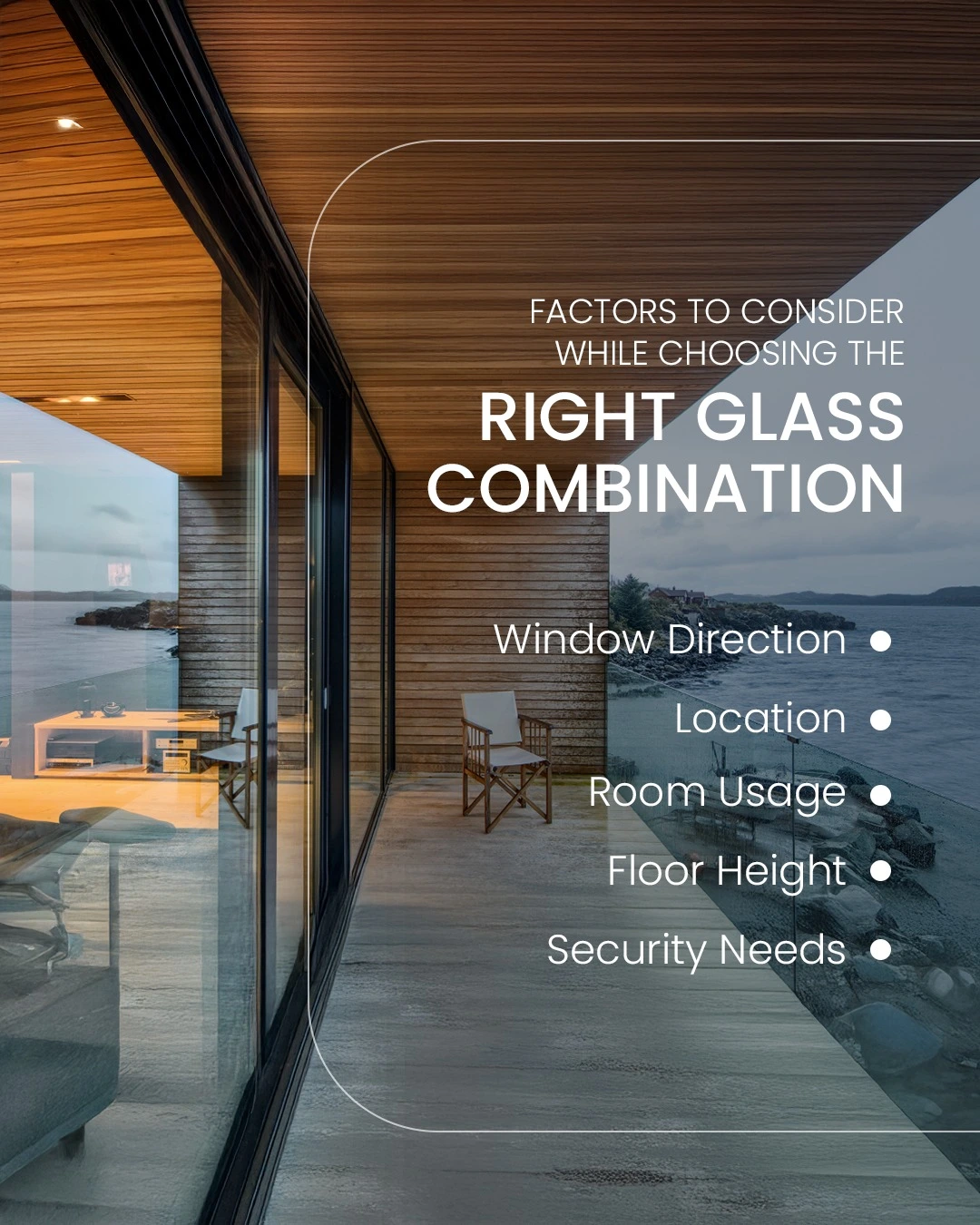
There is no one-glass-fits-all solution. Consider These 5 Factors:
1. Window Direction
- West & South → Low-E / Solar Control
- North → Balanced daylight glass
2. Location
- City / highway → Acoustic laminated DGU
- Coastal → Laminated safety glass
3. Room Usage
- Bedroom → Acoustic + thermal
- Living → Solar control + clarity
4. Floor Height
- Higher floors → Toughened or laminated safety glass
5. Security Needs
- Ground floor → Laminated glass mandatory
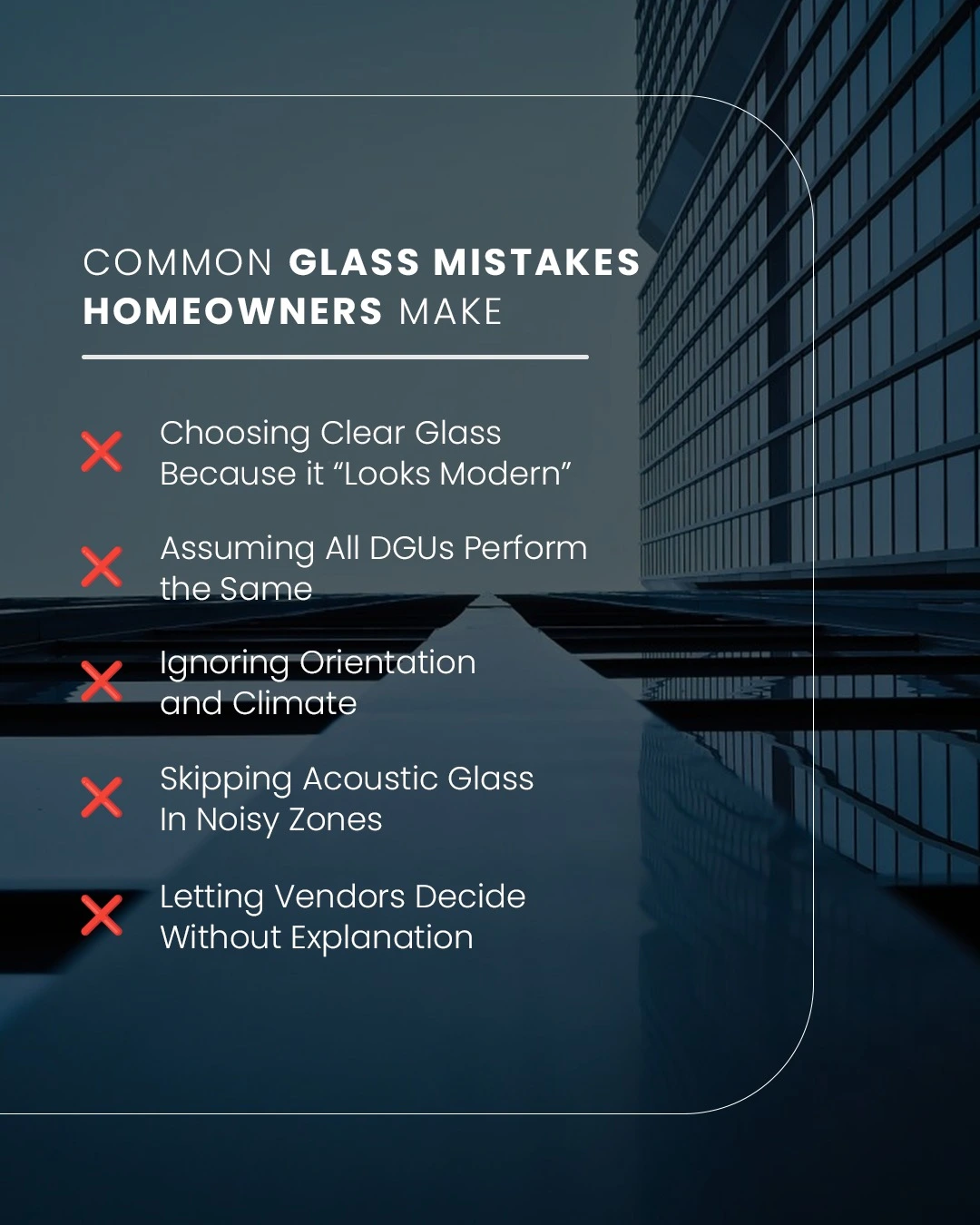
Common Glass Mistakes Homeowners Make
Most glass mistakes aren’t made because homeowners don’t care — they’re made because glass decisions seem simple. They’re not. And these small assumptions often lead to the biggest long-term regrets.
These mistakes don’t show up immediately — they haunt you every summer, every night, every bill cycle.
Questions Every Homeowner MUST Ask
Before finalising aluminium windows and doors, ask:
- Is this glass Low-E or solar control?
- What is the U-value & SHGC?
- Is the DGU argon-filled?
- How much noise reduction (dB) will I get?
- Is this glass laminated or toughened?
- What happens if it breaks?
If answers are vague — walk away.
Architects: Glass Is a Design Decision, Not a Vendor Choice
Glass is often finalised by others, but its consequences always come back to the architect. In high-end residential architecture, performance differences often appear only after a home is lived in.
“Two Homes, Same Elevation”
Architects don’t just design elevations. You design outcomes.
Two homes can look identical from the outside — same façade lines, same openings, same premium aluminium windows. But inside, they can feel like two different worlds. One stays calm and cool. The other overheats by noon, glares on marble floors, and never fully escapes the city’s noise.
That difference is often not the frame. It’s the glass.
Glass is where orientation, shading, elevation language, and energy strategy meet real life. If the glass is chosen late — or chosen by a vendor — you don’t just lose control of performance. You lose control of the experience.
Clients won’t remember SHGC or U-values.
They will remember: “This room is always hot.”
They will remember: “We can’t sleep.”
They will remember: “We keep the curtains closed all day.”
Final Word: Glass Decides How Your Home Feels
Frames define how windows look. Glass defines how your home lives.
The right glass:
- Keeps homes cooler
- Makes rooms quieter
- Protects interiors
- Saves energy
- Improves safety
In a premium home, glass should do far more than just be transparent.
Because the biggest mistake isn’t choosing aluminium windows — it’s choosing the wrong glass inside them.
Our Clientele




















11

Years of
Experience
5046
Projects
Completed
Before You Finalize Your Windows & Doors — Read This First
These mistakes don’t just cost money.
They cost comfort, sleep, privacy and peace of mind.