
Every monsoon, parts of India see rain events that exceed a "normal" season — a day of intense downpour, or 48–72 hours of sustained, wind-driven rain against a façade. This raises a practical question: are a project's windows actually built to stay water-tight under these conditions, or only under standard test conditions? Understanding water-tight aluminium windows — what the term means, and where leakage starts — matters for anyone specifying fenestration in India's high-rainfall regions.
Why Extreme Monsoon Rain Can Challenge Window Systems
Recent reports on extreme rainfall in Delhi-NCR highlight how intense monsoon events can put additional pressure on buildings and their external systems. According to a recent Business Today report, Delhi recorded exceptionally heavy rainfall during the first week of August, with Safdarjung receiving 204.1 mm of rain in a single day.
When intense rain combines with strong wind, water no longer falls vertically — it can be driven against façades under pressure, creating a more demanding condition for window seals, joints and drainage systems. Extreme rainfall window performance therefore depends on how well the complete system is engineered for this combination.
What Is Water-Tightness in Aluminium Windows?
Water-tightness is a measurable property: the ability of a window or door system to resist water penetration when tested under combined pressure and wetting, following recognised methods such as the European standard EN 12208 (tested per EN 1027). These standards define classes based on the air pressure a system can withstand before water passes through to the interior side. It is not simply a marketing adjective — it is a tested, classified characteristic, and different systems can achieve different performance levels.
How Wind-Driven Rain Enters a Window System
Wind-driven rain windows face a different challenge than static rain. Wind pressure pushes water into every gap and joint, not just the glass area. A window doesn't need a visible crack to leak — water can enter through a weak seal, an improperly lapped joint, or a drainage path not designed for sustained volume. This is why testing under simulated wind-driven conditions, not still water alone, is a better indicator of real-world performance.
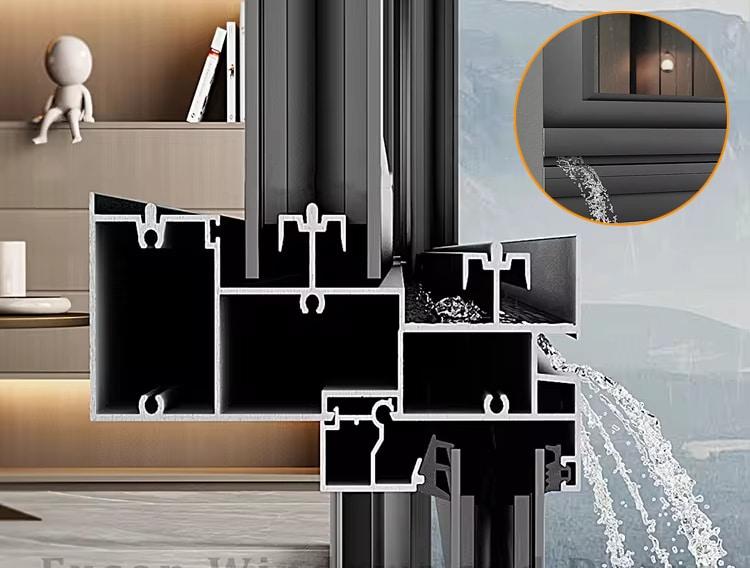
Gaskets, Seals, Joints and Drainage: Where Leakage Can Begin
A window's water resistance depends on several components working together, not the frame material alone:
- Gaskets and seals close the gap between frame, sash and glass; if poorly compressed or degraded, they're often the first failure point.
- Joints, where frame sections meet, become entry paths if fabrication or corner sealing is weak.
- Drainage (weep) systems let water that enters the frame cavity drain back outside instead of pooling — poor drainage design is an underrated cause of aluminium window water leakage.
- Pressure equalisation balances air pressure inside the frame chamber with outside pressure, reducing the force pushing water inward.
Weakness in any one of these, not necessarily the profile material, is usually where a leak starts.
Problems Caused by Repeated Water Seepage
Water entering through a compromised seal rarely announces itself immediately. Over time, repeated seepage can cause dampness, peeling paint, damaged plaster and, in persistent cases, mould. Where electrical points sit near affected walls, prolonged moisture is worth flagging to a qualified electrician. Repeated repairs are also disruptive and costly, and visible damp patches can affect a property's perceived quality and resale appeal.
Why Minimum Compliance May Not Be Enough for Extreme Weather
Most specifications reference minimum applicable Indian Standards — a necessary baseline, but "meeting the minimum" and "engineered for extreme, sustained rainfall" are not the same thing. Standards set a floor for acceptable performance; they don't guarantee optimum protection against unusually intense rain. This is why water-tightness of aluminium windows deserves a closer look at design stage in NCR, coastal cities and other high-rainfall zones, rather than being treated as a checkbox later.
What Architects and Developers Should Check Before Specifying Windows
Before finalising a specification, review the tested water-tightness class and test report; drainage and pressure-equalisation design; glazing and gasket specifications; and the installation standards actually followed on site. A high-rated system installed carelessly can still leak, and a modest system installed with strong site discipline can outperform expectations. Performance is a product of design, components and workmanship together.
Understanding RERA and Construction Defect Liability
Under Section 14(3) of the Real Estate (Regulation and Development) Act, 2016, a promoter is responsible for rectifying structural defects and certain defects in workmanship, quality, or services reported within five years from the date of possession, generally without additional cost and within the prescribed period after receiving notice. If the issue remains unresolved, homebuyers may approach the relevant state RERA authority, such as RERA. This is general statutory information, not legal advice, and its application can depend on the specific facts and agreement for sale. The key takeaway is that fenestration and window-system decisions made during the design and construction stages can have implications well beyond project handover
How to Choose a Better Water-Tight Window System
Choosing a higher-performing system starts with test data, not claims: ask for the water-tightness class and drainage and sealing design. Established European systems — Schüco, for instance, engineered and tested to EN standards and used by fabricators globally, including in India — are one credible reference point among several. The right choice depends on a building's exposure and local wind-rain conditions, not brand name alone.
Practical Checklist for High-Rainfall Regions
- Confirm the tested water-tightness class and request the certificate
- Review drainage (weep hole) and pressure-equalisation detailing
- Check gasket material, glazing method and corner-joint sealing
- Evaluate site exposure: height, orientation, wind and rainfall intensity
- Insist on documented installation checklists, not verbal assurances
- Ask about warranty terms and post-handover service
Frequently Asked Questions
What does "water-tightness" mean for a window?
A tested, classified ability to resist water penetration under combined air pressure and wetting, per standards such as EN 12208.
Do all aluminium and uPVC windows leak in heavy rain?
No. Performance depends on design, components and installation quality, not frame material alone. Many well-specified, well-installed systems perform reliably in heavy rain.
What is wind-driven rain, and why does it matter?
Rain pushed horizontally by wind, putting extra pressure on seals and joints — a more demanding test than still-air rainfall.
Can a window leak without any visible crack or damage?
Yes. Leakage often occurs through a compromised gasket, joint or drainage path rather than a visible defect.
How does RERA relate to window or waterproofing defects?
Under Section 14(3), developers must rectify structural or workmanship-related defects reported within five years of possession, at no extra cost, depending on the facts of each case.
Is meeting IS code enough for extreme rainfall regions?
IS codes set a necessary minimum; for extreme, sustained rainfall zones, a system's tested water-tightness class gives a clearer picture of real-world performance.
What should I ask a window supplier before finalising a project?
The water-tightness test class and certificate, drainage design details, gasket and glazing specifications, and the installation and warranty process.
Conclusion
Extreme monsoon rainfall is a stress test not every window specification is built to pass. Choosing water-tight aluminium windows is less about one feature and more about evaluating the complete system — tested class, drainage design, sealing quality and installation discipline — at the design stage, before a leak appears. That single decision is the most practical safeguard against years of avoidable repair, disruption and liability.
Our Clientele




















11

Years of
Experience
5046
Projects
Completed
Before You Finalize Your Windows & Doors — Read This First
These mistakes don’t just cost money.
They cost comfort, sleep, privacy and peace of mind.