
A window can look breathtaking and still fail where it matters most. And in India, “where it matters most” is not a mood board. It’s monsoon rain, coastal corrosion, dust, heat, wind pressure, and noise.
Homeowners planning a dream home usually start the same way: Pinterest. Villa references. Minimal black frames. Floor-to-ceiling glass. Slim sliders opening to a pool deck.
Here’s the truth most people learn too late:A beautiful window is not the same thing as a high-performance window.
In this article, you’ll learn:
- Why design-first windows often fail in Indian conditions
- How monsoons, heat, wind, and noise expose weak systems
- ultra-slim aluminium frames
- What high-performance aluminium windows actually do
- A simple checklist to avoid costly window mistakes
The Visual Trap: Why Most Premium Homes Make the Same Window Choice
Modern design language pushes everyone toward the same aesthetics
- ultra-slim aluminium frames
- massive glazing
- wide sliding doors
- clean, minimal lines
Nothing wrong with that. The mistake is choosing the look first—and assuming performance will “come along” because the brand is international, the price is high, or the showroom sample feels premium.
In real life, a window’s job is not to impress. It’s to protect comfort—for the next 10–15 years.
Real Case: The Goa Villa That Failed After One Monsoon
A client built a luxury holiday villa in Goa—ocean-facing, crores invested, interiors done to perfection. For windows, they selected ultra-slim European sliders. The catalogue looked stunning. The brand was global.
Then came the first monsoon—and the reality hit fast
- rainwater leakage from bottom tracks
- hardware corrosion from salty coastal air
- glass panels shaking + whistling sounds at night
- AC struggling; rooms staying humid and uncomfortable
The irony? The windows cost ₹1.2 crore. They looked luxurious, but didn’t survive even one season. Repairs were slow, expensive, and dependent on imported parts. And this isn’t rare. Similar failures happen across India—from Goa to Gurugram to Ludhiana.
What High-Performance Windows Actually Do (Beyond Looking Good)
A window isn’t “glass in a frame.” It’s a performance system—and your home’s first barrier against the outdoors. If you’re building a premium home in India, your windows must do five things exceptionally well:
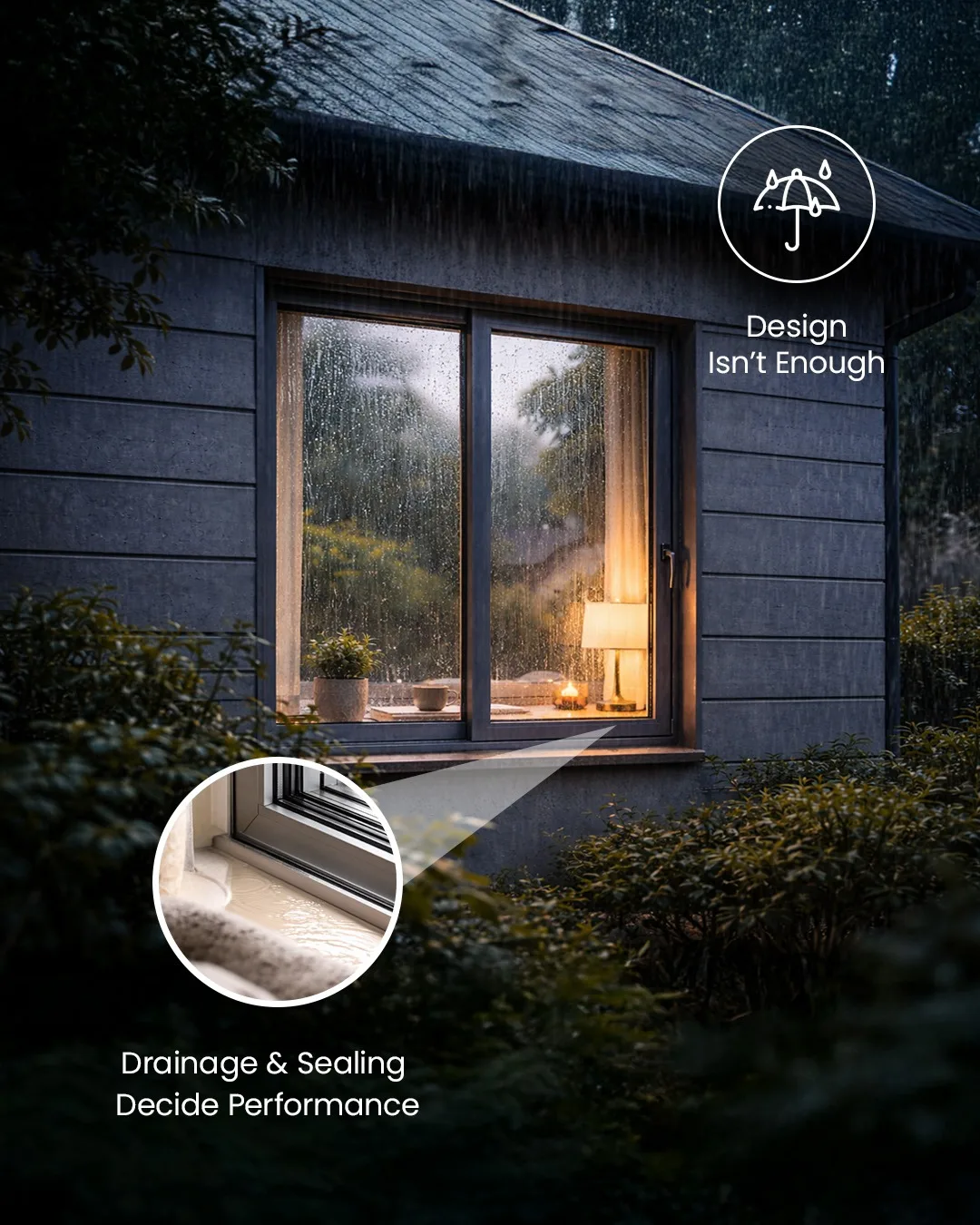
1) Rain Protection That Doesn’t Depend on Luck
Leaks don’t arrive dramatically. They show up as
Most systems fail because of poor drainage design and weak sealing—not because the glass is “bad.”
- damp sills
- bubbling paint
- swollen wooden floors
- moldy corners
What to demand (not request)
- engineered drainage (not makeshift holes)s
- proper sealing design (not “site jugaad”)
- proven water resistance for wind-driven rain
If a window cannot confidently stop monsoon rain, it is not a premium system.
2) Wind Stability That Keeps Your Home Silent and Safe
Strong winds expose weak systems instantly. When wind resistance is poor, you’ll notice
- rattling and vibration
- whistling sounds at night
- flexing frames over time
- loose panels and shaky movements
Premium systems remain stable and silent during storms. Wind performance is not about looks or brand names. It’s about structural design, reinforcement, and testing.
3) Sealing That Stops Dust, Heat, and Pollution at the Source
If your home gets dusty too quickly—or feels hot despite air-conditioning—this is often not a “city problem.” It’s a sealing problem.
Tiny gaps around sashes and frames allow
- dust + pollution to creep in
- hot air to leak inside
- cool air to escape
High-performance windows close those gaps completely with precision fit, durable gaskets, and locking pressure that actually seals.
4) Glass That Reduces AC Load (Not Just Adds Aesthetic)

Here’s what most homeowners don’t realise until bills arrive
Up to 60% of unwanted heat can enter through windows.
Clear glass may look premium, but in Indian summers it can turn rooms into hotboxes. Performance glass isn’t about tint. It’s about heat rejection + daylight balance.
What the right glass improves:
- better comfort without overworking the AC
- lower energy use
- more consistent cooling across rooms
Glass selection is an energy decision—not a cosmetic one.
5) Noise Control That Makes a Luxury Home Feel Like Luxury
Noise doesn’t only come through glass. It enters through
That’s why even expensive homes struggle with traffic, construction, and city noise—because the system is not engineered acoustically.
- gaps
- vibrations
- poor fittings
- weak sealing
A well-designed window system reduces sound intrusion and improves
- sleep quality
- focus and work-from-home comfort
- day-to-day calm

Quick Self-Check: Does Your Window Choice Protect You—or Only Impress?
If you want the look, ask these before you sign
- How does this system handle heavy rain + wind-driven water?
- What prevents rattling and frame flex in high winds?
- What sealing system stops dust and pollution?
- What glass specification reduces heat and AC load?
- What measures reduce noise through gaps and vibration?
If the answers are vague, verbal, or “trust us”—you’re not buying a performance system. You’re buying a brochure.
The Difference Between “Looks Premium” and “Performs Premium”
Design matters. Slim frames matter. But design without performance leads to.
- leaks
- noise
- high maintenance
- repeated repairs
- expensive retrofits
A premium window should not demand your attention. It should simply work—quietly, efficiently, reliably—for years.
If you’re investing crores into a home, windows are not a decorative decision. They are a comfort, safety, and long-term performance decision. Don’t choose a window that looks luxurious on day one—but fails when real weather arrives.
Read carefully. Ask better questions. Choose performance first.
FAQs
What is the biggest window mistake homeowners make in India?
Choosing windows based on design and aesthetics without checking performance factors like rain protection, sealing, heat control, wind stability, and noise reduction.
Why do luxury windows leak during monsoons?
Leakage usually occurs due to poor drainage design, weak sealing, and lack of testing for wind-driven rain—not because of glass alone.
Are European window systems suitable for Indian weather?
Only if they are engineered and tested for Indian conditions. Design alone does not guarantee performance.
Do windows really affect electricity bills?
Yes. Up to 60% of unwanted heat can enter through windows, significantly increasing AC usage and energy costs.
The 7-Point Window Performance Checklist
Read this before you approve any window design or quotation.
- ☐ Monsoon Ready: Has this system been tested for wind-driven rain and real Indian monsoons?
- ☐ Wind Stable: Will the windows remain silent and stable during storms—without rattling or flexing?
- ☐ Properly Sealed: Does the system prevent dust, heat, and pollution from entering when closed?
- ☐ Energy Efficient Glass: Will this glass reduce heat and lower AC usage, not just look premium?
- ☐ Noise Control: Can this system genuinely reduce traffic and outdoor noise—not just on paper?
- ☐ Durable Hardware: Is the hardware and finish suitable for my climate (coastal, dusty, humid)?
- ☐ Trained Installation & Support: Who installs it, who services it, and what happens if something fails later?
Final Thought
If any answer is unclear or verbal, pause. A premium window should come with clarity—not assumptions.
Our Clientele




















11

Years of
Experience
5046
Projects
Completed
Before You Finalize Your Windows & Doors — Read This First
These mistakes don’t just cost money.
They cost comfort, sleep, privacy and peace of mind.