
Why This Mistake Is Costing Homeowners Lakhs
One of the biggest mistakes premium homeowners make is assuming one window system works everywhere in India.
It doesn’t.
India isn’t a single climate country — it’s a collection of extreme climate zones. Yet many people install the same aluminium windows and doors in Delhi, Mumbai, Goa, Bengaluru, and Shimla. That’s like wearing the same clothes for summer, winter, and monsoon — and expecting comfort.
Imported window systems work where they’re designed for — but India demands climate-adapted performance, not blind replication.
The Big Myth: “Imported = Best”
What works in Europe often fails badly in India. European windows are built for: mild weather, low dust, controlled rain.
India hits them with:
- Extreme heat
- Violent monsoons
- Dust & pollution
- Humidity & corrosion
- Strong winds & cold winters
The result?
Leakage. Rust. Noise. Discomfort. Repairs. A window that isn’t climate-adapted will fail — no matter how premium it looks.
Real Story: Spain’s System, Pune’s Pain
A homeowner in Pune proudly installed an imported sliding door system used in luxury villas in Spain.
Within one year:
- AC bills shot up due to heat ingress
- Rooms overheated every afternoon
- Water accumulated in tracks during monsoonn
- Hardware began corroding faster than expected
The design looked stunning — but performance collapsed. Why? Because Spain doesn’t face Indian heat, dust, or monsoon intensity.
India Has Multiple Climate Zones — Your Windows Must Respond Accordingly
Hot & Dry Zones (Delhi, Jaipur, Nagpur, Ludhiana)
Challenges
- Extreme heat (up to 48°C)
- Dust storms
- High pollution
- Dry air
What Your Aluminium Windows Need
- Low-E or solar-control glass
- High air-tightness to block dust
- EPDM gaskets that don’t crack
- Strong thermal insulation
Without this: Your home turns into an oven — even with the AC running all day.

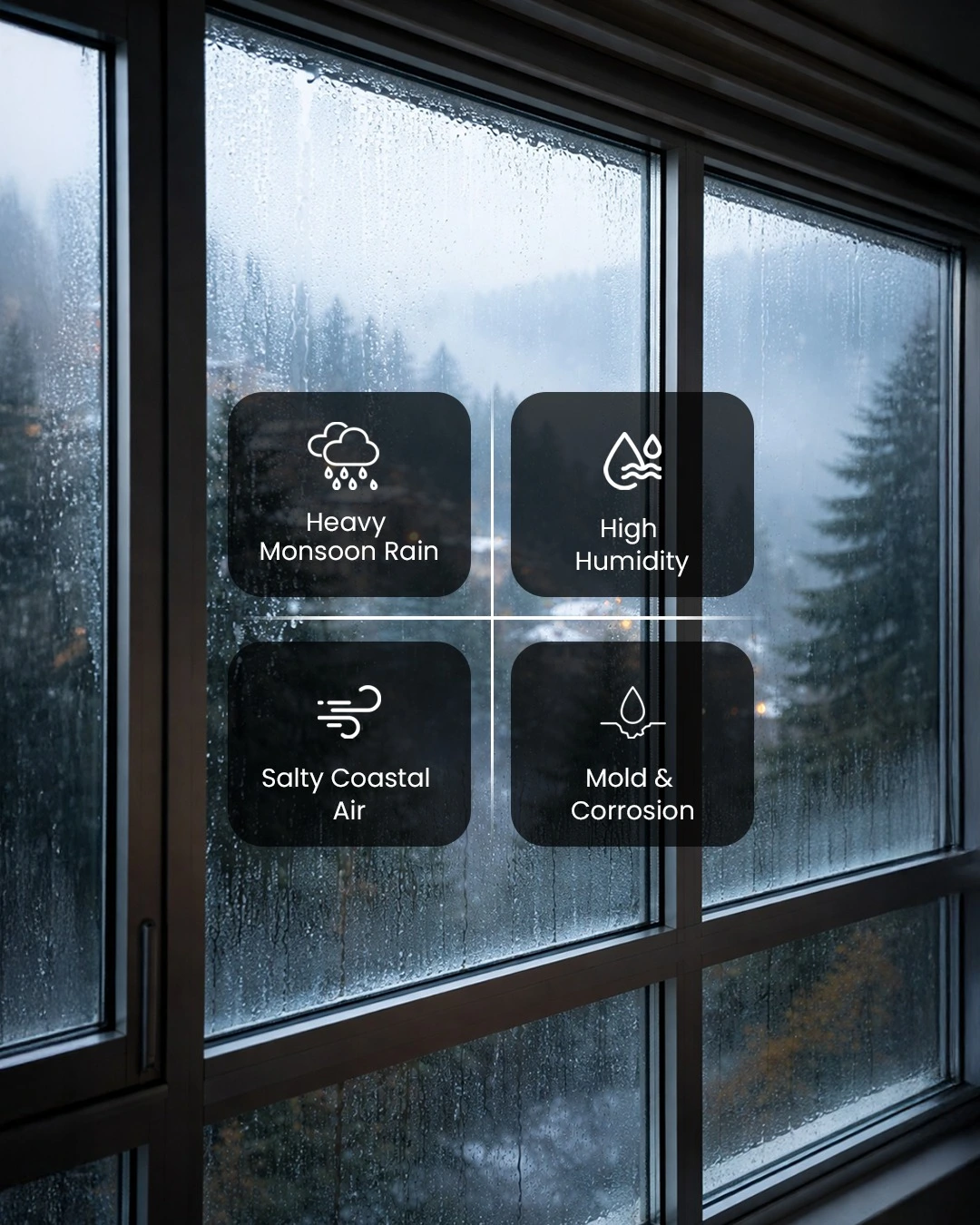
Hot & Humid Zones (Mumbai, Chennai, Kochi, Goa)
Challenges
- Heavy monsoon rain
- High humidity
- Salty coastal air
- Mold and corrosion
What Your Windows Need
- High water-tightness ratings
- Marine-grade hardware (SS-316 or equivalent)
- Advanced drainage tracks
- Anti-corrosion aluminium coating
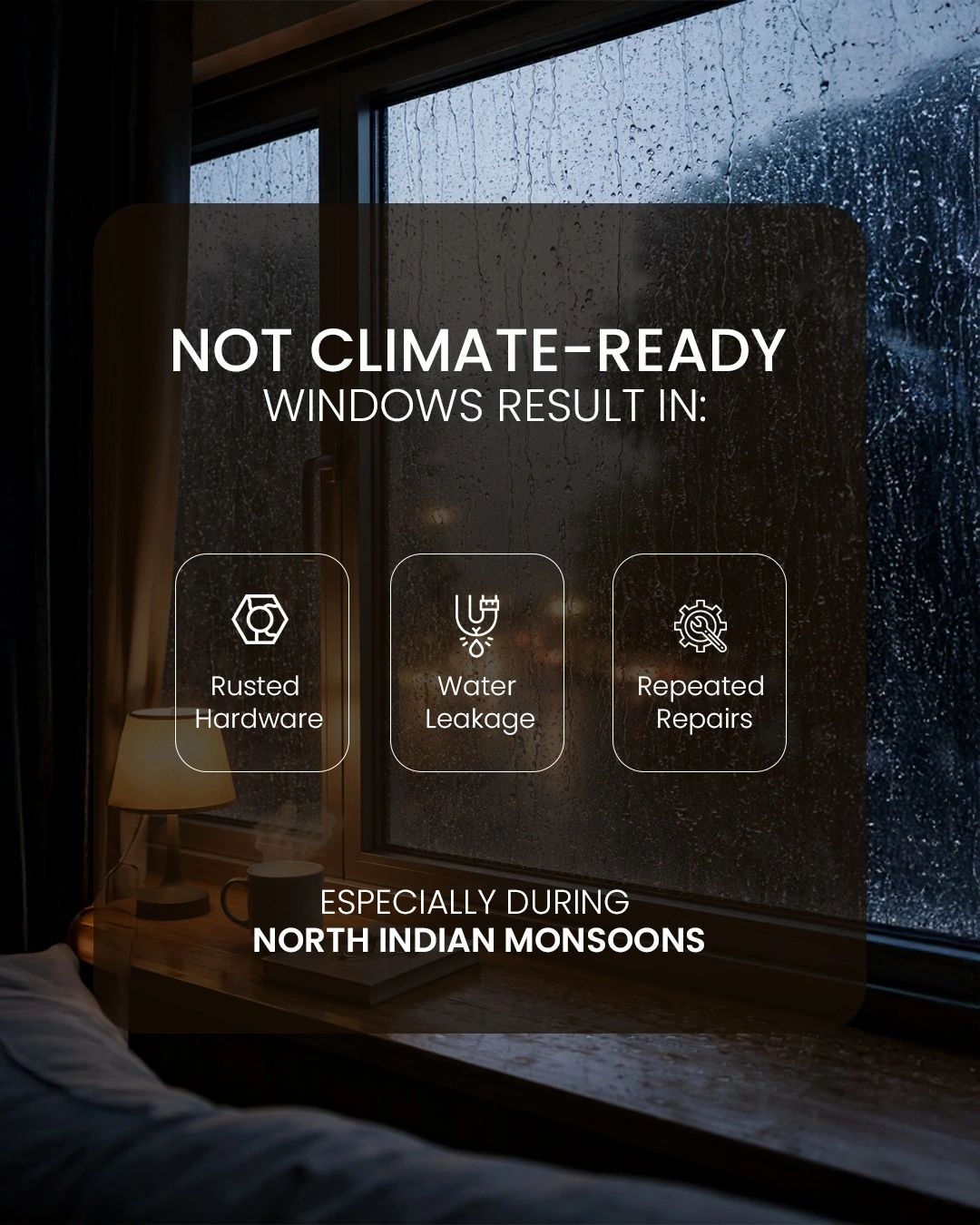
Without this: Rust, leakage, swollen interiors, and repeated repairs
Cold & Hilly Zones (Shimla, Manali, Mussoorie)
Challenges
- Low temperatures
- Condensation
- Fogging
- Heat lossn
What Your Windows Need
- Double or triple-glazed units (DGU)
- Argon-filled glass
- Thermally broken aluminium profiles
- Tight sealing to prevent heat loss
Without this: Cold drafts, foggy glass, uncomfortable interiors, and high heating costs.
Polluted Urban Zones
(Delhi NCR, Kanpur, Gurgaon)
Challenges
- PM2.5 & PM10 pollution
- Traffic noise
- Construction dust
What Your Windows Need
- Multi-point locking systems
- Acoustic laminated glass
- High air-tightness ratings
- Precision installation
Without this: Dusty interiors, constant noise, poor sleep, and health issues.
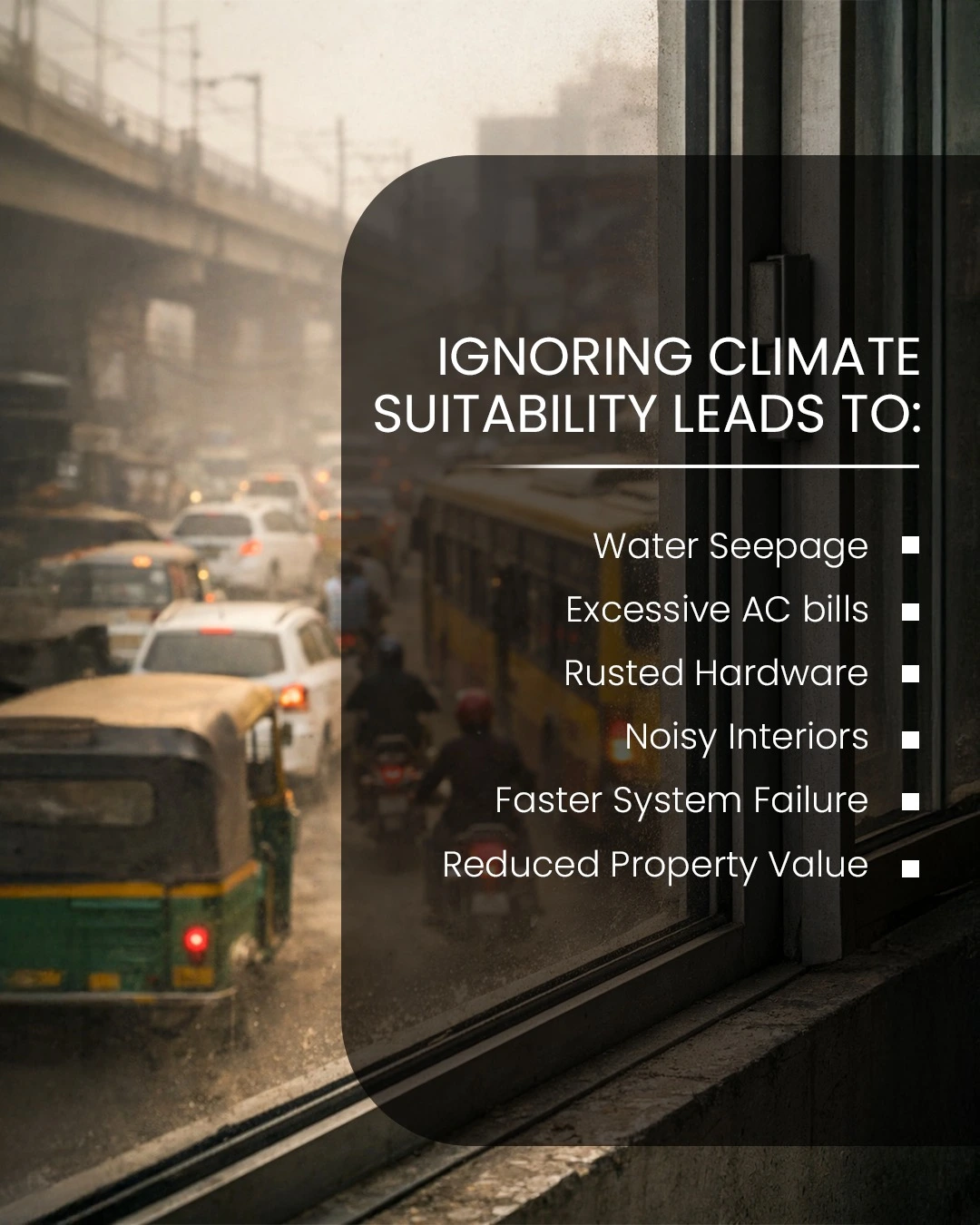
What Happens When Climate Is Ignored?
When windows aren’t designed for local climate, failure is delayed — but inevitable. Leaks appear during monsoon, AC bills climb in summer, hardware deteriorates, and comfort slowly disappears. The real pain comes later, when fixing these issues costs far more than choosing right in the first place.
The solution is simple: choose windows engineered for your climate, not just your elevation.
Why “One-System-Fits-All” Fails in India
Many vendors push the same aluminium window system everywhere because it’s easier for them — not because it’s right for you.
True premium window solutions are:
- Climate-specific
- Performance-tested
- Custom-configured (glass, gaskets, drainage, hardware)
Luxury is not about copying trends. Luxury is about intelligent adaptation.
What Smart Homeowners Should Ask
Before finalising aluminium windows or doors, ask:
- Is this system tested for my city’s climate?
- What are the water, wind, and air-tightness ratings?
- Is the hardware suitable for humidity or coastal air?
- Is the glass chosen based on sun direction and heat exposure??
- Can I see a similar project already installed in my region?
If the answers are vague — walk away.
Advice for Architects & Designers
As a leading expert in the fenestration industry, we advise Architects & Designers to not use the same window specification across all projects.
- Delhi ≠ Goa
- Pune ≠ Shimla
- Mumbai ≠ Jaipur
Treat windows like structure — not décor.
A design that adapts to protects:
- Your client’s comfort
- Your project’s performance
- Your professional reputation
Final Word: Choose Climate-Adapted, Not Just Trendy
A window system that looks luxurious but fails in your climate isn’t premium — it’s a liability.
True luxury windows:
- Stay cool in summer
- Stay dry in monsoon
- Stay silent in cities
- Stay durable for decades
India demands windows that understand India.
Before approving any design, ask one simple question: “Will this system survive where I live — year after year?” That answer separates smart homes from expensive regrets.
FAQs Homeowners Actually Ask
1. If imported windows are premium, why do so many people still face problems later?
Because many imported systems are copied without adapting them to Indian heat, dust, monsoons, and pollution. The problem usually isn’t the brand — it’s how and where the system is used.
2. Everything looks fine at installation. Why do issues show up later?
Climate-related problems appear after the first extreme season — summer heat exposes thermal weakness, monsoon reveals drainage gaps, and pollution accelerates hardware wear.
3. Is paying more for climate-adapted windows actually worth it?
Yes. Climate-adapted systems reduce AC costs, prevent leakage, last longer, and avoid repeated repairs, making them cheaper over the life of the home.
4. How do I know if a window system is really suited for my city?
Ask for test reports, local project references, and clarity on how the glass, hardware, and drainage are configured for your climate — not just where the system comes from.
Our Clientele




















11

Years of
Experience
5046
Projects
Completed
Before You Finalize Your Windows & Doors — Read This First
These mistakes don’t just cost money.
They cost comfort, sleep, privacy and peace of mind.